Buy gfxspace.com ?
We are moving the project
gfxspace.com .
Are you interested in purchasing the domain
gfxspace.com ?
domain@kv-gmbh.de · 0541-91531010
Buy gfxspace.com ?
What is the derivation of the variance decomposition of the variance?
The variance decomposition of the variance is derived from the decomposition of the total variance into its components. This decomposition helps to understand the relative contributions of different sources of variation to the total variance. By partitioning the variance into its constituent parts, such as the variance due to different factors or sources, we can quantify the amount of variability explained by each component. This decomposition is commonly used in statistical analysis to assess the importance of various factors in explaining the overall variability in a dataset. **
What is the asymptotic variance?
The asymptotic variance is a measure of the variability of an estimator as the sample size approaches infinity. It represents the limit of the variance of the estimator as the sample size becomes very large. In statistical theory, it is used to assess the precision and reliability of an estimator in the long run. A smaller asymptotic variance indicates that the estimator is more efficient and provides more precise estimates as the sample size increases. **


Similar search terms for Variance
Top-Angebote
Products related to Variance:
-
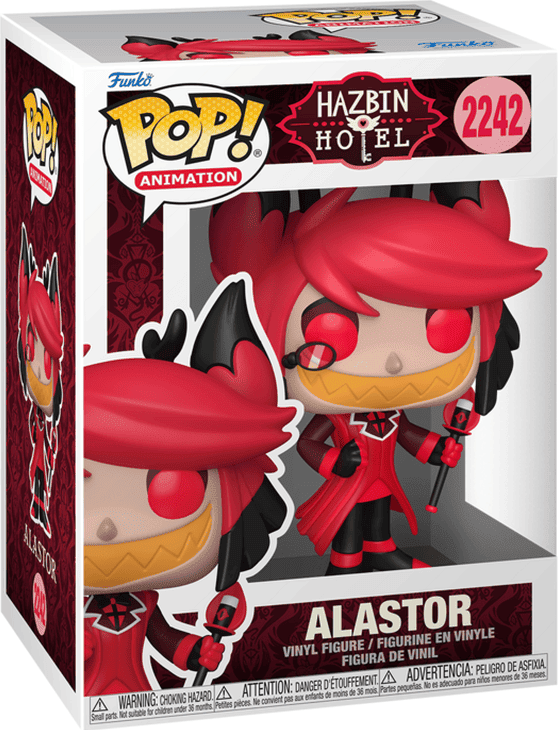
Funko Pop! Animation Hazbin Hotel Alastor withBring the Radio Demon to your collection with this officially licensed Funko Pop! Animation Alastor vinyl figure. Based on the hit animated series Hazbin Hotel, this stylized Alastor figure captures his unmistakable red hair, wide yellow grin, smart suit, and signature microphone. The figure is supplied in a presentation window box, making it ideal for displaying alongside other Funko Pop! Animation characters. This is a chance-of-chase release, where one standard Alastor figure is supplied per box, but there is a possibility of receiving the rarer chase version instead. The chase features an alternative, darker demon-form color scheme, making it a particularly exciting find for Hazbin Hotel and Funko collectors. Chase variants are packed and shipped at random, so receiving one is not guaranteed. Display Alastor with your favorite Hazbin Hotel characters or add him to a wider Funko Pop! collection.13,09 £*Shipping: 3,95 £Secure redirect to the provider
-
Funko Pop! Animation Rilakkuma Kiiroitori Vinyl Figure #2363Add a cheerful touch to your collection with this Funko Pop! Animation Kiiroitori figure from the Rilakkuma series. This adorable yellow bird is captured in Funko's distinctive stylized vinyl format, with its rounded body, bright orange beak, expressive dark eyes, and tiny brown feet. Known as Rilakkuma's hardworking and tidy companion, Kiiroitori makes a charming standalone display piece and pairs well with other Rilakkuma characters and Funko Pop! Animation figures. The collectible comes in a colorful window display box, making it suitable for displaying unopened or taking out for closer inspection. Key features include an officially licensed Rilakkuma Kiiroitori collectible Funko Pop! Animation vinyl figure, measuring approximately 7.4 cm in height. It is presented in a collector-friendly window display box, ideal for Rilakkuma, anime, and Funko Pop! collectors. The product dimensions are approximately 15.9 x 11.5 x 8.8 cm (H x W x D), and it is recommended for ages 3 years and over. Contains small parts.13,99 £*Shipping: 3,95 £Secure redirect to the provider
-
Das Walt Disney Filmarchiv (German Edition) by Daniel Kothenschulte - TASCHEN Hardback - Disney Animation History Art Book - 512pp Collector's EditionThis German-language edition of Das Walt Disney Filmarchiv is a compact 40th anniversary edition of TASCHEN's landmark survey of Walt Disney's animated features. Written and curated by film historian Daniel Kothenschulte, this lavishly illustrated hardback book traces the studio's complete animation journey from its silent-era beginnings through to the last features made under Walt Disney's personal creative direction. Packed with rare artwork, concept paintings, and behind-the-scenes photography, it is a substantial reference work for serious collectors, film historians, and lifelong Disney enthusiasts.24,00 £*Shipping: 2,99 £Secure redirect to the provider
-
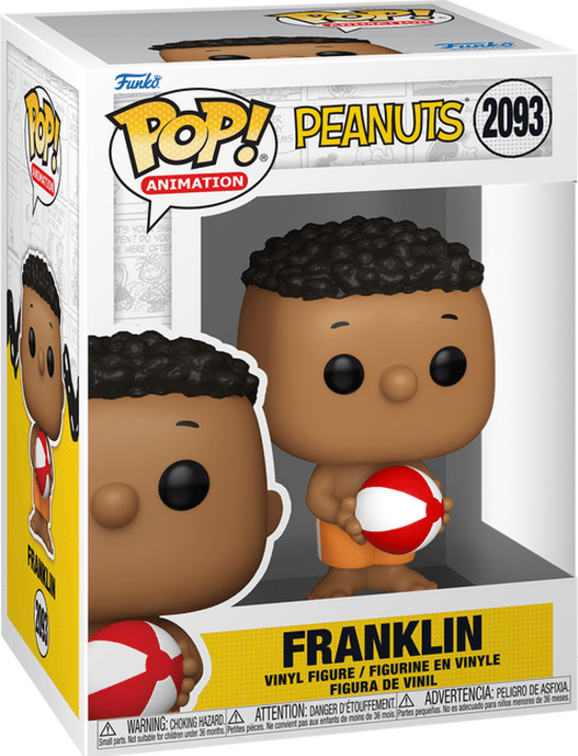
Funko Pop! Animation: Peanuts - Franklin #2093 - Collectible Vinyl FigureBring a much-loved Peanuts character to your collection with this Funko Pop! Franklin vinyl figure. Franklin is presented in Funko's distinctive stylized design, holding his beach ball and ready to join your Peanuts display. This collectible figure is supplied in an illustrated window display box, allowing the character to be viewed while packaged. It is designed for collectors, Peanuts fans, and anyone who enjoys classic animated characters in Pop! form. The figure is made of vinyl and is recommended for ages 3 and over. Display Franklin alongside other Peanuts collectibles or keep him boxed as part of your Funko collection. The supplied version is a single Franklin figure.11,70 £*Shipping: 3,95 £Secure redirect to the provider


-
What is variance in mathematics?
In mathematics, variance is a measure of how much a set of numbers varies or spreads out. It is a statistical measure that indicates the extent to which data points differ from the mean (average) of the set. A high variance means that the numbers in the set are spread out over a wider range, while a low variance means that the numbers are closer to the mean. Variance is calculated by taking the average of the squared differences between each data point and the mean. **
-
What is the difference between variance and standard deviation, and why is variance needed?
Variance and standard deviation are both measures of the spread or dispersion of a set of data. The main difference between the two is that variance is the average of the squared differences from the mean, while standard deviation is the square root of the variance. Standard deviation is often preferred over variance because it is in the same units as the original data, making it easier to interpret. However, variance is still needed in statistical calculations, such as in the calculation of the standard deviation, and it provides valuable information about the variability of the data. **
-
How to conduct a two-way analysis of variance with unbalanced design?
To conduct a two-way analysis of variance with an unbalanced design, you can use statistical software like R, SAS, or SPSS. First, input your data into the software, making sure to account for the unbalanced design by including all data points. Then, specify your model with the two factors and their interaction term. The software will then calculate the sums of squares, degrees of freedom, and F-statistics for each factor and interaction, allowing you to assess the significance of the effects. Finally, interpret the results to determine if there are significant differences between the groups. **
-
How can the variance be transformed?
The variance can be transformed by applying a linear transformation to the data. This can involve multiplying each data point by a constant, adding a constant to each data point, or a combination of both. Another way to transform the variance is by applying a non-linear transformation to the data, such as taking the square root or the logarithm of the data. These transformations can help to stabilize the variance, make the data more normally distributed, or make the variance more homogeneous across different groups or levels of a factor. **


How do you calculate variance correctly?
Variance is calculated by finding the average of the squared differences between each data point and the mean of the data set. First, calculate the mean of the data set. Then, subtract the mean from each data point, square the result, and find the average of these squared differences. This average is the variance. The formula for variance is: variance = Σ (x - μ)² / n, where Σ represents the sum of the squared differences, x is each data point, μ is the mean, and n is the number of data points. **
What is variance explanation in psychology?
Variance explanation in psychology refers to the extent to which a particular variable or set of variables can account for the variability in a certain psychological phenomenon or behavior. It is a measure of how much of the variability in a particular outcome can be attributed to the variables being studied. For example, in a study on the factors influencing depression, variance explanation would indicate how much of the variability in depression scores can be explained by factors such as genetics, environment, or personality traits. Understanding the variance explanation in psychology is important for identifying the key factors that contribute to a particular psychological outcome. **
Top-Angebote
Products related to Variance:
-
Funko Pop! Animation Jin Kougasaki - Chance of Chase - 11.2 cm - Pop! Animation Box 2441Official Funko Pop! Animation figure of Jin Kougasaki from Tougen Anki. Features his Rasetsu Academy uniform with face mask and dark clothing. Includes Pop! Animation Box Number 2441. 11.2 cm tall. Chance of Chase release with 1 in 6 probability of a maskless variant.11,79 £*Shipping: 3,95 £Secure redirect to the provider
-
Funko Pop! Animation Bluey Queen Chilli Vinyl Figure #2373 - 10.4 cm Tall - Official Funko Pop! AnimationBring a regal touch to your Bluey collection with the Funko Pop! Animation Bluey Queen Chilli vinyl figure. Inspired by Chilli's royal appearance in the beloved Bluey episode 'Queens', this charming vinyl figure captures Bluey's mum dressed up as a queen and ready for imaginative play. Queen Chilli is styled in Funko's instantly recognizable Pop! design, with an oversized head, expressive eyes, and a beautifully detailed character sculpt. She wears her decorative crown and colourful cape, while her magnifying glass adds a playful detail that fans of the episode will recognize. Standing approximately 10.4 cm tall, she makes a great addition to a desk, shelf, or Bluey display. This figure is supplied in its individual window display box, featuring Bluey branding and allowing the figure to be viewed while keeping it protected. The figure is part of the Pop! Animation series, numbered #2373.10,59 £*Shipping: 3,95 £Secure redirect to the provider
-
Funko Pop! Animation Hazbin Hotel Alastor withBring the Radio Demon to your collection with this officially licensed Funko Pop! Animation Alastor vinyl figure. Based on the hit animated series Hazbin Hotel, this stylized Alastor figure captures his unmistakable red hair, wide yellow grin, smart suit, and signature microphone. The figure is supplied in a presentation window box, making it ideal for displaying alongside other Funko Pop! Animation characters. This is a chance-of-chase release, where one standard Alastor figure is supplied per box, but there is a possibility of receiving the rarer chase version instead. The chase features an alternative, darker demon-form color scheme, making it a particularly exciting find for Hazbin Hotel and Funko collectors. Chase variants are packed and shipped at random, so receiving one is not guaranteed. Display Alastor with your favorite Hazbin Hotel characters or add him to a wider Funko Pop! collection.13,09 £*Shipping: 3,95 £Secure redirect to the provider
-
Funko Pop! Animation Rilakkuma Kiiroitori Vinyl Figure #2363Add a cheerful touch to your collection with this Funko Pop! Animation Kiiroitori figure from the Rilakkuma series. This adorable yellow bird is captured in Funko's distinctive stylized vinyl format, with its rounded body, bright orange beak, expressive dark eyes, and tiny brown feet. Known as Rilakkuma's hardworking and tidy companion, Kiiroitori makes a charming standalone display piece and pairs well with other Rilakkuma characters and Funko Pop! Animation figures. The collectible comes in a colorful window display box, making it suitable for displaying unopened or taking out for closer inspection. Key features include an officially licensed Rilakkuma Kiiroitori collectible Funko Pop! Animation vinyl figure, measuring approximately 7.4 cm in height. It is presented in a collector-friendly window display box, ideal for Rilakkuma, anime, and Funko Pop! collectors. The product dimensions are approximately 15.9 x 11.5 x 8.8 cm (H x W x D), and it is recommended for ages 3 years and over. Contains small parts.13,99 £*Shipping: 3,95 £Secure redirect to the provider
-
What is the derivation of the variance decomposition of the variance?
The variance decomposition of the variance is derived from the decomposition of the total variance into its components. This decomposition helps to understand the relative contributions of different sources of variation to the total variance. By partitioning the variance into its constituent parts, such as the variance due to different factors or sources, we can quantify the amount of variability explained by each component. This decomposition is commonly used in statistical analysis to assess the importance of various factors in explaining the overall variability in a dataset. **
-
What is the asymptotic variance?
The asymptotic variance is a measure of the variability of an estimator as the sample size approaches infinity. It represents the limit of the variance of the estimator as the sample size becomes very large. In statistical theory, it is used to assess the precision and reliability of an estimator in the long run. A smaller asymptotic variance indicates that the estimator is more efficient and provides more precise estimates as the sample size increases. **
-
What is variance in mathematics?
In mathematics, variance is a measure of how much a set of numbers varies or spreads out. It is a statistical measure that indicates the extent to which data points differ from the mean (average) of the set. A high variance means that the numbers in the set are spread out over a wider range, while a low variance means that the numbers are closer to the mean. Variance is calculated by taking the average of the squared differences between each data point and the mean. **
-
What is the difference between variance and standard deviation, and why is variance needed?
Variance and standard deviation are both measures of the spread or dispersion of a set of data. The main difference between the two is that variance is the average of the squared differences from the mean, while standard deviation is the square root of the variance. Standard deviation is often preferred over variance because it is in the same units as the original data, making it easier to interpret. However, variance is still needed in statistical calculations, such as in the calculation of the standard deviation, and it provides valuable information about the variability of the data. **
Similar search terms for Variance
-
Das Walt Disney Filmarchiv (German Edition) by Daniel Kothenschulte - TASCHEN Hardback - Disney Animation History Art Book - 512pp Collector's EditionThis German-language edition of Das Walt Disney Filmarchiv is a compact 40th anniversary edition of TASCHEN's landmark survey of Walt Disney's animated features. Written and curated by film historian Daniel Kothenschulte, this lavishly illustrated hardback book traces the studio's complete animation journey from its silent-era beginnings through to the last features made under Walt Disney's personal creative direction. Packed with rare artwork, concept paintings, and behind-the-scenes photography, it is a substantial reference work for serious collectors, film historians, and lifelong Disney enthusiasts.24,00 £*Shipping: 2,99 £Secure redirect to the provider
-
Funko Pop! Animation: Peanuts - Franklin #2093 - Collectible Vinyl FigureBring a much-loved Peanuts character to your collection with this Funko Pop! Franklin vinyl figure. Franklin is presented in Funko's distinctive stylized design, holding his beach ball and ready to join your Peanuts display. This collectible figure is supplied in an illustrated window display box, allowing the character to be viewed while packaged. It is designed for collectors, Peanuts fans, and anyone who enjoys classic animated characters in Pop! form. The figure is made of vinyl and is recommended for ages 3 and over. Display Franklin alongside other Peanuts collectibles or keep him boxed as part of your Funko collection. The supplied version is a single Franklin figure.11,70 £*Shipping: 3,95 £Secure redirect to the provider
-
Funko Pop! Animation Mudano - Officially Licensed Collectible - 12.4 cm TallOfficially licensed Tougen Anki Funko Pop! Vinyl Figure 2442 featuring Naito Mudano in his signature black suit and red umbrella with black-and-white striped shirt and rollerblades.12,59 £*Shipping: 3,95 £Secure redirect to the provider
-
Funko Pop! Animation Bluey Granny Rita Vinyl Figure #2369 - CollectablesOfficial Funko Pop! Animation release featuring Bluey’s Granny Rita in her purple granny costume holding a handbag. Oversized head and expressive eyes capture the character’s distinctive look. Ideal for display in a Funko Pop! collection.11,79 £*Shipping: 3,95 £Secure redirect to the provider
-
How to conduct a two-way analysis of variance with unbalanced design?
To conduct a two-way analysis of variance with an unbalanced design, you can use statistical software like R, SAS, or SPSS. First, input your data into the software, making sure to account for the unbalanced design by including all data points. Then, specify your model with the two factors and their interaction term. The software will then calculate the sums of squares, degrees of freedom, and F-statistics for each factor and interaction, allowing you to assess the significance of the effects. Finally, interpret the results to determine if there are significant differences between the groups. **
-
How can the variance be transformed?
The variance can be transformed by applying a linear transformation to the data. This can involve multiplying each data point by a constant, adding a constant to each data point, or a combination of both. Another way to transform the variance is by applying a non-linear transformation to the data, such as taking the square root or the logarithm of the data. These transformations can help to stabilize the variance, make the data more normally distributed, or make the variance more homogeneous across different groups or levels of a factor. **
-
How do you calculate variance correctly?
Variance is calculated by finding the average of the squared differences between each data point and the mean of the data set. First, calculate the mean of the data set. Then, subtract the mean from each data point, square the result, and find the average of these squared differences. This average is the variance. The formula for variance is: variance = Σ (x - μ)² / n, where Σ represents the sum of the squared differences, x is each data point, μ is the mean, and n is the number of data points. **
-
What is variance explanation in psychology?
Variance explanation in psychology refers to the extent to which a particular variable or set of variables can account for the variability in a certain psychological phenomenon or behavior. It is a measure of how much of the variability in a particular outcome can be attributed to the variables being studied. For example, in a study on the factors influencing depression, variance explanation would indicate how much of the variability in depression scores can be explained by factors such as genetics, environment, or personality traits. Understanding the variance explanation in psychology is important for identifying the key factors that contribute to a particular psychological outcome. **
* All prices are inclusive of VAT and, if applicable, plus shipping costs. The offer information is based on the details provided by the respective shop and is updated through automated processes. Real-time updates do not occur, so deviations can occur in individual cases. ** Note: Parts of this content were created by AI.